|
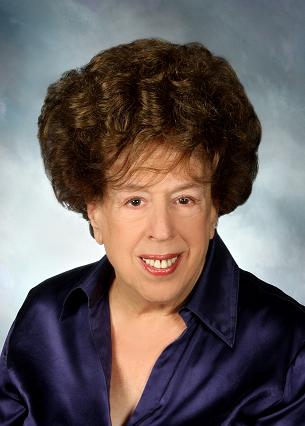
Zsuzsanna Ozsváth |
Poetry of Survival:
HOW SOME HOLOCAUST CHILDREN LEARNED TO CONQUER DEATH
By
THOMAS ORSZÁG-LAND in BUDAPEST
When the Danube Ran Red By Zsuzsanna Ozsváth, Syracuse University Press, 2010, Hardcover, 184pp. $17.95, ISBN-10: 0815609809 & 13: 978-0815609803 |
|
|
MANY CHILD survivors of the Holocaust owed their lives to the deadly
serious business of games played collectively or alone, that enabled
them to adjust to dangerous situations, sometimes even to control them,
and to relieve tension in relative safety. These survival mechanisms
were rooted in poetry.
In a moving memoir reminiscent of Anne Frank’s diary, Professor
Zsuzsanna Ozsváth of the University of Texas describes the role played
by games in her own, childhood victory over death in the climax of war
and in the face of prolonged, organized racist mass murder in Hungary.
Her experience of the life-preserving games of Jewish children during
the Holocaust in Budapest is very close to my own. Other accounts are
turning up elsewhere, often in verse.
If you read just one of the thousands of personal Holocaust memoirs
published nowadays by the thinning, final generation of Jewish
survivors, perhaps this one
–
When the Danube Ran Red
By Zsuzsanna Ozsváth, Syracuse University Press, 2010, Hardcover, 184pp.
$17.95, ISBN-10: 0815609809 & 13: 978-0815609803
–
should be it.
She was then devotedly preparing for the promise of a career as a poet
and concert pianist. Her ability amidst the battle to absorb herself in
the solitary game of reciting poetry and playing the piano in the
absence of an instrument may have saved her life.
A dozen years later, she left Hungary illegally, taking with her just
one valuable possession: a collection of verse by Miklós Radnóti
(1909-1944), enslaved and murdered by fellow Hungarians because of his
Jewish birth despite his well documented, sincere conversion to
Catholicism.
Her excellent English translation of that book, composed in
collaboration with the American poet Frederick Turner, has greatly
contributed to Radnóti’s worldwide reputation today as perhaps the
greatest among the Holocaust poets. In an imaginary dialogue with the
Prophet Nahum, Radnóti describes the total war engulfing Nazi-occupied
Europe (in the Ozsváth/Turner translation published in
Foamy Sky, Princeton
University Press, 1992 & Corvnia/Budapest, 2002):
POET:
...now the swift nations
slay one another, the human soul stands as naked as Niniveh.
Then to what purpose the exhortations, the hellish green clouds of
the locusts, what purpose? when humans are baser than animals!
Here and elsewhere they smash on the walls the innocent infants,
steeples are torches, homesteads flower as furnaces, households
roast in their embers, in smoke the factories rise up and vanish.
Streets full of people on fire go galloping, sink with a rumble,
hugely embedded the bomb-burst shatters masses asunder;
shrunken as cowpats on fields in the summer, the dead are lying
piled in the plazas and squares of their cities; and as it was written
all that you prophesied now is fulfilled. But say, what brought you
back to the earth from the primal dustcloud?
PROPHET:
Wrath: that forever
orphaned the children of men must serve in the hosts of the blasphemous,
shaped but not natured like men
–
and that I might see the unclean
citadel’s fall and unto these latter days speak and bear witness...
Today she is the Leah and Paul Lewis Chair of Holocaust Studies and
professor of literature and history of ideas at Texas University in
Dallas. Her writing and lectures have won her a string of distinguished
honours including an American Fulbright and a top Hungarian Academy of
Sciences award. Her new memoir is a profoundly moving work of literary
as well as academic merit.
The title of the book refers to a scene witnessed by Zsuzsa the child,
enacted nightly along the banks of the River Danube throughout the
siege, when the Hungarian Nazis executed groups of Jewish captives, men
women and children, bound by ropes in pairs to prevent survival.
The idea was that if one had by chance escaped death by shooting, the
survivor might still be dragged down by the weight of the attached
corpse.
“Nobody screamed,” she recalls, “nobody cried. You could hear nothing
but the shots and the splash of the bodies falling into the red foam
(of) the river, which flowed... like blood.”
The Radnóti poems today are helping Hungary to comprehend the tragedy.
This country of fewer than 10m souls was responsible for the humiliation
and murder of some 600,000 of its Jewish citizens during the final
phases of the Second World war, most of them brutally delivered for
petty financial gain to the gas chambers of Auschwitz.
Zsuzsa and many other Jews crammed into the vermin-infested ghetto
tenements of Budapest or hiding elsewhere in the capital escaped
deportation. But they had to live with the constant threat of mass
murder and worse
– there was worse – meted out by the armed thugs
of the Hungarian Arrow-Cross/Nyilas party, the role models of the
neo-Nazi rabble on the rise today throughout Eastern Europe.
Her greatest secret fear was enforced separation from her beloved
parents. That came to pass as the invading Soviets smashed through the
combined German and Hungarian defences. But even then, she managed to
keep her calm, alone in hiding, sustained by poetry and music.
The ferocity of the three-month siege, including vicious hand-to-hand
fighting under constant Allied aerial bombardment, is compared by
historians to the earlier battle for Stalingrad. But unlike Budapest,
Stalingrad had been at least emptied of its residents. The siege of
Budapest raged over the heads of 800,000 civilian witnesses, mostly
women and children. The death toll approached 160,000. While the
children composed their verse and played their games to delay death,
many combatants on both sides reserved their last bullets for themselves
for fear of being captured alive by their savage opponents.
Even during the final confrontations, the orgy of anti-Semitic violence
continued in the ghetto. Zsuzsa, I, and all the others I know who in any
way participated in the siege of Budapest have never overcome, or even
attempted to overcome the experience.
Nearly seven decades after the event, Zsuzsa feels still indebted to
countless miracles incorporated in the poems and games ghetto children
created to distance themselves from the face of death. These usually
took the shape of a human face.
There was
Erzsébet
(Erzsi) Fajó,
Zsuzsa’s gentile playmate, friend and nanny who risked all for the
survival of her employers who in turn eventually adopted her. Her name
today is preserved by an olive tree planted in her memory in the Garden
of the Righteous at Yad Vashem in Jerusalem.
There was the family’s kindly, grey-moustached postman who turned up
unexpectedly to seek out Zsuzsa in the ghetto when she was separated
from her parents after witnessing her first massacre staged by the
Arrow-Cross. He must have been aware of the peril he risked as he
delivered to the tearful child messages of hope from her mother.
And there was a uniformed member of a Nazi raiding party dragging away
the Jews,
whose hastily whispered advice saved the entire family.
Was he an angel? Or a decent cop? Or a member of the armed Zionist
resistance that regularly infiltrated the ranks of the killers to save
their victims?
The imagination of the temporarily unsupervised children flared as they
wrote and recited their poems and played in an atmosphere of heightened
tension approaching the state of collective hysteria endured by their
families. The poems and games gave the children “space,” the author
recalls, “that allowed us to leave behind the world of the adults as
well as the ghetto house and with it the Germans, our fear of separation
and the threat of death.”
They acted out well-known dramas in verse or invented new ones,
reflecting the cultural pursuits of their community. “Good morning,
Ophelia,” the ghetto children no longer allowed to attend school greeted
each other in the morning, or “Good morning, Tristian,” or “Good
morning, Rigoletto!”
Picking up the game, she relates, the person so addressed would try to
meet the challenge by answering the call and stepping into the chosen
theatrical role. The children sometimes changed the script to suit the
prevailing mood or circumstance. They played feverishly together
throughout the day and composed and rehearsed new scenes alone in their
minds late into the night.
Some children managed to save lives through verse and play by diffusing
potentially lethal situations, adds
Professor George Eisen, executive director and associate vice-president
at Nazareth College of Rochester, New York.
His pioneering, interdisciplinary study of the ghettoes and
concentration camps of Europe
(Children & Play in the Holocaust: Games Among the Shadows,
Massachusetts University Press, 1988 & Corvina/Budapest 1990) cites
instances of children’s games staged to divert the attention of guards
from forbidden activities punishable by death, such as smuggling food or
participating in educational activities.
Eisen is also a Jewish survivor of the Hungarian Holocaust and the siege
of Budapest. He poignantly quotes a five-year old girl engaged in
serious conversation with her doll:
Do not cry, little one!
When the Germans come
to grab you...
I will not leave you.
I add below my own recollection of a collective, unconscious endeavour
by Jewish children in a tenement not far from Zsuzsa’s apartment block
to express and relieve through play their community’s suppressed fear of
death:
GHETTO GAME
Beneath a gloomy square of the sky
in the
shadow of awesome, looming walls,
a crowd of kids met day after day
to test,
to learn in that well of twilight
which ones in the block were destined to die.
Just a few at a time. Our faces were grey
and small, our eyes were clouded with fear.
We hung the Book and a key on a thread –
for we understood the path of death
yet could not make it go away.
We huddled close with lonely dread
in
our hearts. The Bible turned around
and with it, the key. They came to rest
at
random to point at a ghetto child.
He would be the first among the dead.
The block has grown, the world progressed.
I,
the survivor, stand in the sunlight
aware of the cloud in every eye
as
fear of the future grips the globe,
rekindling doom in every breast.
The most moving record of a Holocaust survival game that I know is in
Zsuzsa’s book. It describes the triumph of a terrified, starving girl
over a nightmare endured during three days and nights at the height of
the siege when she was confined to a cupboard in an abandoned, sprawling
apartment by the river, exposed to heavy machinegun fire and
intermittent bombing.
She recalls: “I decided to practice the piano in my head... and started
to imagine I was playing Beethoven’s f-minor sonata, op. 3, from the
first measure to the last. Some passages went very well, some not at
all. While my right hand’s fingers were really singing in the second
part, my left hand’s fingers were too slow playing the triplets in the
fourth part.
“I need to practice this more, I thought. But I did not go back to work
on those passages; rather I started to play the second sonata in A
major; and again, I thought through every single note. In the meantime,
the bombing started anew... and (I) recited poetry.”
THOMAS ORSZÁG-LAND is a poet and award-winning foreign correspondent.
DEATHMARCH, the fourth
edition of his translation from the Hungarian of Holocaust poetry by
Miklós Radnóti, was published by Snakeskin and The Penniless Press, both
in England, in 2009.
|
||